How to Spot Fake Black Friday List Prices on Amazon & Walmart (2026 Guide)
A practical 2026 guide to inflated MSRPs, fake list prices, coupon math, and how to verify a Black Friday deal against recorded price history.
Assume a Black Friday discount is real only after the exact model, seller, and checkout total survive a price-history check. A high reference price is context, not evidence.
What you need to know
- Match the full model, variant, condition, and seller before trusting a percentage.
- Judge the final checkout total after shipping, membership, and coupon conditions.
- Use dated price evidence and retailer terms, not countdown timers or generic “compare at” claims.
EDITOR'S WATCHLIST
Worth comparing from our current guides
Selected from Savlume’s active product research. Prices and availability can change.

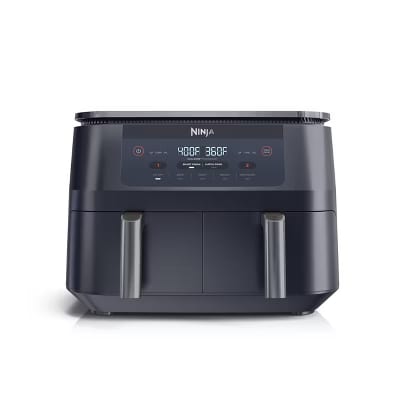
Foodi 6-Quart 2-Basket Air Fryer
A Black Friday page can show three different numbers at once: a manufacturer’s suggested retail price, a retailer’s “was” price, and the price you actually pay after a coupon or membership condition. Only the last number is your checkout cost. The rest are context, and some of that context is deliberately inflated.
The goal is not to assume every discount is fake. It is to slow down long enough to answer one question: was this product genuinely sold near the reference price, or is the reference price mostly decoration? The checks below take a few minutes and work across Amazon, Walmart, Target, Best Buy, and most other US retailers.
1. Treat an inflated MSRP as marketing, not proof of value
MSRP is a suggested price. It is not a law, and it is not a promise that anyone paid it. A TV with a $1,199.99 MSRP may have spent most of the year at $799. A cookware set with a $299 “list price” may routinely sell for $129. When the “discount” is calculated from a price the market never really paid, the percentage is technically true and practically misleading.
Look for evidence that the reference price was used by a real retailer for the same model, capacity, and condition. A generic “compare at” number with no retailer name is weak evidence. A matching retailer listing with a dated price observation is stronger. Savlume’s past offers and price archive is useful for checking whether the same model appeared earlier, and our verification methodology explains how source-reported and retailer-checked prices are labeled.
2. Six signals that a list price deserves extra scrutiny
- The reference price changes with the sale. If the “was” price rises right before the discount appears, the discount may be manufactured.
- The model number is vague or missing. A similar-looking older model can carry a different value. Match the full model, size, color, and condition.
- The bundle inflates the comparison. Extra accessories, a gift card, or a subscription can make the package look more valuable than the core product.
- The coupon changes the story. A price after a one-time code, clip coupon, or membership discount is not the same as the public shelf price.
- The discount is unusually large for a mainstream retailer. Deep markdowns exist, but a 70% “sale” on a current flagship product should trigger a model and seller check.
- The page creates urgency without evidence. A countdown timer is not a price observation. Check the retailer’s actual deadline and return policy.
| Signal | Weak evidence | Stronger evidence |
|---|---|---|
| Reference price | “Compare at $299” with no retailer | Dated listing for the exact model at a named US retailer |
| Product identity | Generic product name and photo | Exact model, capacity, condition, and seller |
| Discount math | Percentage based only on an inflated MSRP | Current checkout price versus a credible recent selling price |
| Coupon | “Save 30%” with undisclosed eligibility | Code, minimum spend, membership, and expiration stated together |
| Availability | “While supplies last” with no stock detail | Retailer stock status and the seller shown on the product page |
3. Amazon and Walmart need different checks
On Amazon, open the seller and shipping section before judging the price. A low offer from a third-party seller may carry slower delivery, a restocking fee, or a different warranty. Check whether the price is tied to a coupon, Subscribe & Save, Prime-only eligibility, or a limited-time deal. The same product can have several offers on one page, and the “list price” may refer to a different configuration.
On Walmart, confirm whether the seller is Walmart or a marketplace seller. A low price from an unfamiliar seller can be legitimate, but the return path and delivery terms may differ. Walmart’s rollback and clearance labels are useful, yet the final checkout total can still include shipping or a membership requirement. Compare the exact item number and pack count rather than the headline photo alone.
4. A five-minute price-history workflow
- Write down the exact model and variant, including size, color, capacity, and condition.
- Check the retailer page for the current checkout price, seller, shipping, and coupon conditions.
- Look for an earlier Savlume record in the archive or a matching offer page; compare like-for-like models, not a newer or smaller version.
- Check the retailer’s return window and whether the item is final sale, open-box, refurbished, or marketplace-sold.
- Decide on a maximum acceptable checkout total before the sale. If the current total is above that number, the percentage is irrelevant.
Savlume’s Black Friday hub groups live offers with their conditions and labels source-reported prices separately from retailer-checked prices. Use it as a starting point, then verify the exact retailer page. For a second opinion on product choice, compare the relevant guide, such as 75-inch and larger TVs or air fryers under $100, before chasing a percentage.
5. What a real deal usually looks like
A credible deal has a stable product identity, a named seller, a clear price you can actually pay, and a reference price that is consistent with the product’s history. It does not need to be the lowest price ever recorded. It needs to be a price you would be comfortable paying for that exact item, from that seller, with those terms.
If the evidence is incomplete, wait. Black Friday and Cyber Monday create plenty of second chances, and a page that disappears in ten minutes is not a reliable basis for a large purchase. The best defense against a fake discount is a written target price and a product you already decided you want.
Keep checking
QUICK ANSWERS
Frequently asked questions
Is a high MSRP always fake?
No. Some products genuinely launch near MSRP and later sell below it. The problem is using an unverified MSRP as the only evidence of savings. Check the exact model, the seller, and a dated selling price when possible.
Should I buy when a countdown timer appears?
Only if the checkout total already matches your target price and the seller and return terms are clear. A timer does not prove the price is low or that the offer will disappear.
How do I compare a coupon price with a regular sale price?
Compare the final amount after the coupon, shipping, and mandatory conditions with the best verified non-coupon price for the same model. Do not compare a coupon price with an inflated list price.
Reporting method: Savlume editors synthesize retailer terms, product positioning, and recorded offer evidence. We do not claim hands-on lab testing unless a guide explicitly says so.